Blog

  • Why 3D Printing is a cost effective alternative to injection moulding for small batch manufacturing

    Why 3D Printing is a cost effective alternative to injection moulding for small batch manufacturing

    In today’s fast-moving product development world, small businesses, inventors, and manufacturers often need just 50, 200, or 500 units — not tens of thousands. Traditional injection moulding, especially when sourced from overseas, can be slow, expensive, and inflexible for these smaller volumes.

    This is exactly where UK 3D printing shines. For production runs up to around 1,000 units, additive manufacturing (3D printing) frequently offers lower overall costs, dramatically faster lead times, and far greater design freedom compared to imported injection-moulded parts.
    At MORSH 3D, we help UK businesses take advantage of this every day. In this guide, we’ll compare the two methods and show why local 3D printing is often the smarter choice for small-batch manufacturing.

    The Traditional Route: Overseas Injection Moulding

    Injection moulding has been the go-to method for plastic parts for decades — and for good reason at high volumes. However, for smaller batches it comes with significant drawbacks:

    • High upfront tooling costs — A single injection mould tool can cost £3,000–£15,000+ depending on complexity. This cost must be amortised across your units, making per-part prices very high when ordering fewer than several thousand pieces.
    • Long lead times — Tool design, manufacturing in Asia, shipping to the UK, and customs clearance often mean 8–16 weeks (or longer) from order to delivery.
    • Minimum order quantities (MOQs) — Many overseas factories require 1,000–5,000+ units, forcing you to order more stock than you actually need.
    • Design changes are expensive — Any modification to the part requires a new or modified tool — usually at significant extra cost and delay.
    • Supply chain risks — Global shipping delays, port congestion, currency fluctuations, tariffs, and quality control issues from a distance can disrupt your timeline and budget.
    • High carbon footprint — Parts travel thousands of miles by sea or air before reaching you.

    For many UK businesses launching new products, testing markets, or serving niche customers, these limitations make overseas injection moulding inefficient and risky.

    The Modern Alternative: UK 3D Printing for Small Batches

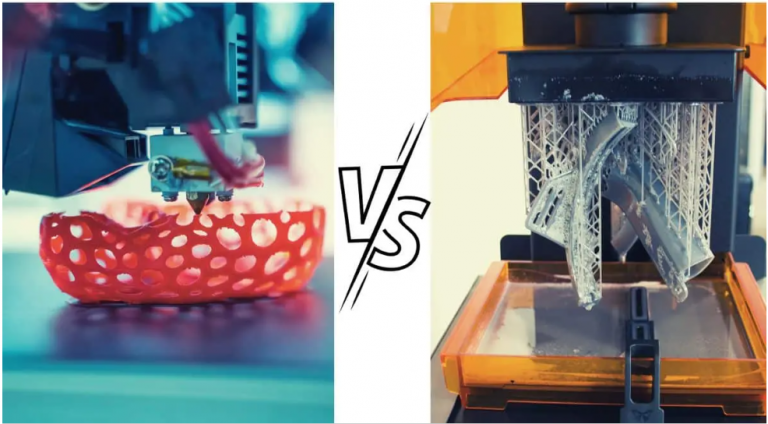
    Fused Deposition Modelling (FDM) and Stereolithography (SLA) 3D printing allow parts to be produced directly from digital files with no tooling required. This removes the biggest barriers of traditional manufacturing for lower volumes. Here’s why UK-based 3D printing is often the better choice for runs up to 1,000 units:

    • Dramatically Lower Upfront Costs – With 3D printing there is no tooling cost. You only pay for the materials and machine time. This makes the economics far more favourable for small batches. Many projects that would be uneconomical with injection moulding become perfectly viable.
    • Much Faster Turnaround as parts are printed and delivered on demand. UK 3D printing services can often deliver parts in 3–10 working days from order confirmation.
    • No waiting for moulds to be made or shipped from overseas.
    • Perfect for rapid prototyping, market testing, obsolete parts or urgent replacement parts.
    • Unlimited Design Flexibility & Iteration – Need to strengthen a feature, change a dimension, or add a custom logo? Simply update the file and reprint. Design changes cost almost nothing compared to modifying an injection mould.
    • On-Demand Production – No Overstock. Print exactly the quantity you need, when you need it. This reduces storage costs and the risk of obsolete stock.
    • Better Supply Chain Security & Sustainability – Local UK manufacturing means shorter supply chains, fewer disruptions, and full visibility. Significantly lower transport emissions.
    • Easier compliance with UK regulations and quality standards.
    • Wide Material Choice – Modern 3D printing offers engineering-grade materials including tough PLA, PETG, ABS, Nylon, flexible TPU, and high-detail resins. Many are suitable for functional end-use parts, not just prototypes.

    When Does 3D Printing Make More Sense Than Injection Moulding?

    For most startups, product developers, and small manufacturers in the UK, the sweet spot for 3D printing is exactly the range they actually need.

    • 1 – 1,000 units: 3D printing usually wins on cost, speed, and flexibility.
    • 1,000 – 5,000+ units: The break-even point depends on part size and complexity, but injection moulding starts to become more economical at higher volumes.

    How MORSH 3D Supports Your Small-Batch Manufacturing Needs

    At MORSH 3D, we specialise in making small-batch production fast, simple, and cost-effective for UK businesses.
    Here’s how we help:

    • Instant online quotes — Upload your STL or Obj file and get a price in seconds, including material and quantity options.
    • FDM and SLA technologies — Choose the right process for your needs (high strength or fine detail).
    • Small batch expertise — Whether you need 10 prototypes or 800 end-use parts, we have the capacity and experience.
    • Free standard UK postage on most orders.
    • Batch discounts that make larger small-runs even more attractive.
    • Ready-to-print model collections if you’re looking for off-the-shelf solutions.
    • Personal support — Talk to us about materials, design for additive manufacturing (DfAM) tips, or post-processing options.

    We work with product designers, engineers, educators, cosplay creators, model makers, and small manufacturers across the UK who need reliable, high-quality parts without the headache of overseas production.

    Ready to Bring Your Product to Life?

    If you’re developing a new product, need functional prototypes, or want to produce a small batch of custom parts, UK 3D printing offers a clear advantage in speed, cost, and flexibility over traditional imported injection moulding.

    Get your instant quote today and see how affordable and fast small-batch manufacturing can be.

    Have questions about materials or design? Contact us — we’re happy to advise.